
Civil Defense approval is not just a stamp on drawings — it certifies the facility is safe for its occupants. From our experience getting projects approved for major petroleum and industrial companies, these five points cause most rejections and delays.
1. Egyptian Fire Code compliance first
Many offices design to NFPA alone and get surprised in review. The baseline is the Egyptian Code for fire protection design fundamentals, complemented by NFPA where the local code leaves details open.
2. Complete, documented hydraulic calculations
Reviewers want the full calculation path: hydraulically most remote area, design density, pressure and flow at each sprinkler, friction losses back to the fire pump. Shortcut tables without references are a guaranteed comment.
3. Listed fire pumps with real performance curves
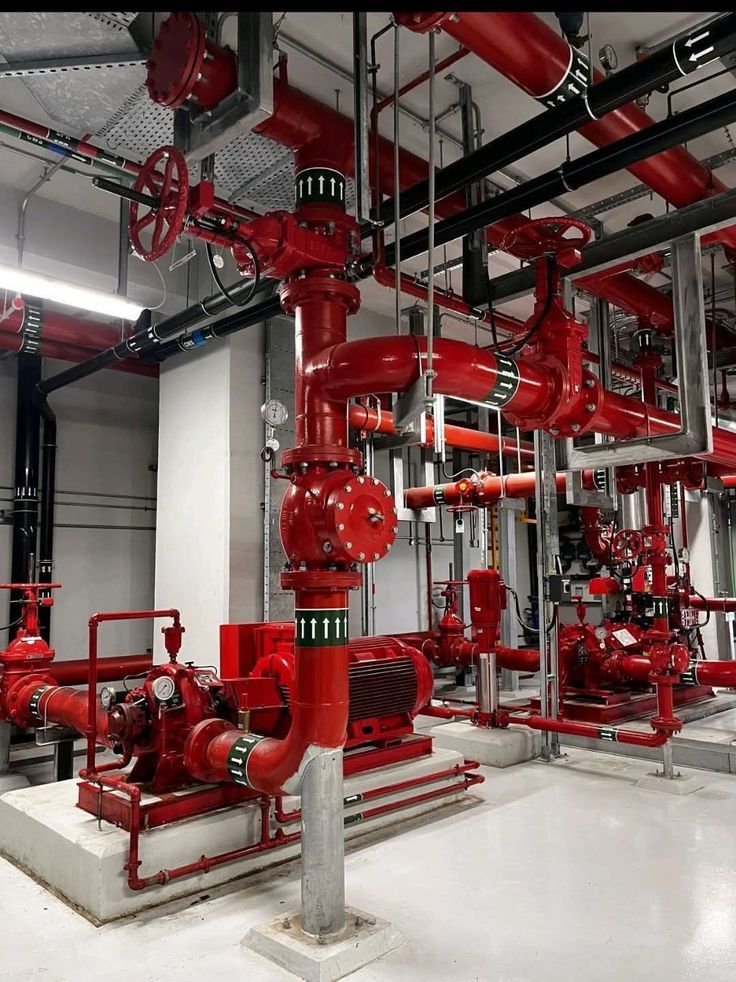
The pump set (electric — diesel standby — jockey) must match the calculated duty point with UL/FM listed performance curves or equivalents accepted by Civil Defense.
4. Correct hose cabinet & hydrant coverage
Spacing, hose lengths, and outdoor hydrant positions relative to fire truck access — all precise review points, easily avoided with correct design from day one.
5. A complete documentation package
Properly scaled drawings, legend tables, material specifications, equipment certificates. COME delivers a submission-ready approval package — cutting the review cycle from several rounds to one in most of our projects.
Final advice
Post-construction modifications cost far more than correct design. Engage a certified consultant before concrete is poured — not after pipes are installed.